

Review: Desiderii Marginis - Tragedy Ecstasy Doom

Artist: Desiderii Marginis
Album: Tragedy Ecstasy Doom
Label: Self-released
Release date: September 2026
There are two things that separate legendary musicians from merely great ones: longevity and integrity. Longevity in the sense that they never stop composing, performing and in general perfecting their craft over the course of decades. Integrity in the sense that they listen to their inner artistic voice above all external input; public perception or expectations be damned. In the case of Desiderii Marginis, longevity is certainly not up for debate, as the project has been putting out landmark albums for more than three decades now, with over a hundred live performances to boot, and Johan Levin as its mastermind is rightly considered one of the forefathers of the dark ambient genre as we understand it today. Desiderii Marginis' latest album, however, makes a particularly interesting inquiry into the integrity part of the equation.
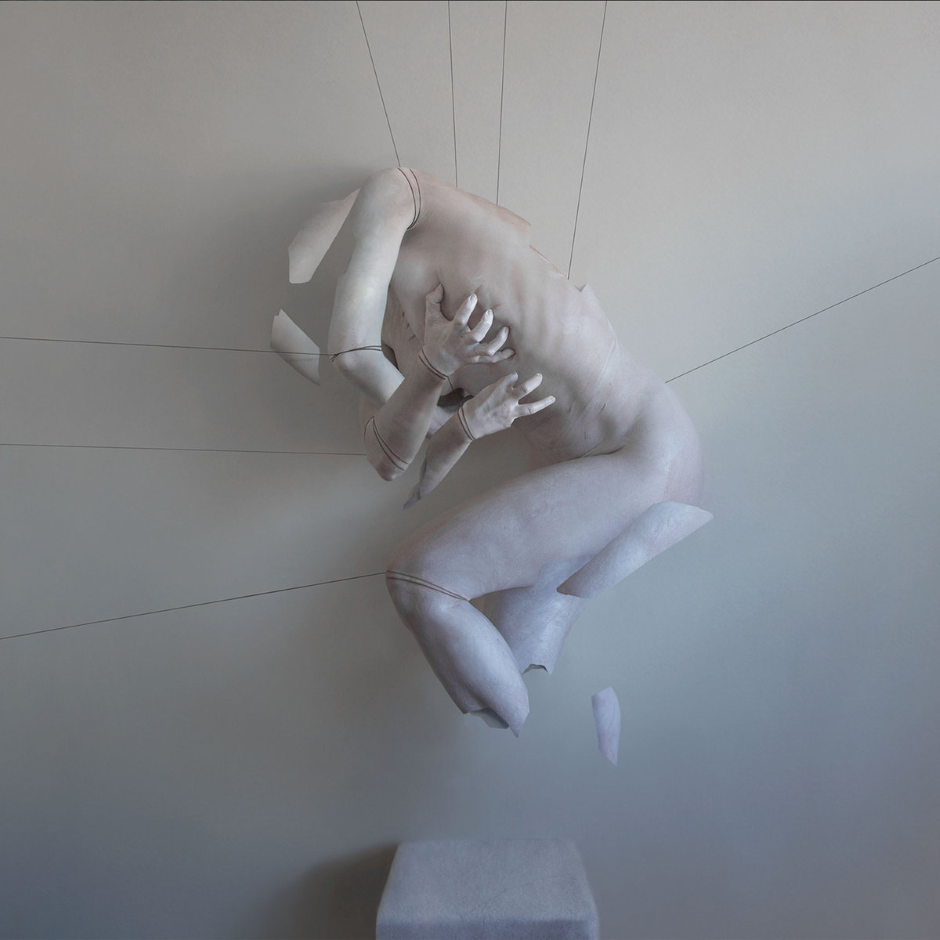
Seemingly out of nowhere, Tragedy Ecstasy Doom was unleashed upon the unsuspecting world a couple of weeks ago, but the timing of the release is far from the only surprise here. Inspired by the work of Mark Rothko (which the beautiful cover artwork more than hints at), the album is a drastic departure from the melodic, industrial-tinged and narrative-rich dark ambient Desiderii Marginis is celebrated for. The five tracks, all of them clocking in at over 10 minutes, are essentially elongated, monolithic and rather monotonous (not in a pejorative way) drone pieces. Ironically, that makes the album require more attention than anything in Desiderii Marginis' back catalogue rather than less, as the deeply meditative nature of the tracks requires careful listening to properly immerse into and decode. Needless to say, this is not suddenly a different artist, and those with an appreciation for Johan's previous work will easily discern many of the same elements the project has been espousing for decades (such as the trademark clang and the metallic yet melodic drone loops, especially on the mesmerising final track Graves for the Living). What has changed is how these elements are treated and employed; much like Rothko's work, this is Desiderii Marginis turned on its head and stripped of all but the most basic of layers, although not to the level of anonymity or losing the signature atmospheres only this particular artist is capable of creating. The compositions take a lot more time to build up their atmospheres, even if this isn't immediately obvious, in the sense that I was rarely aware of the passage of time on any of my listens, and was in fact taken aback several times that the almost one-hour-long album had already reached its end.
Tragedy Ecstasy Doom is not Desiderii Marginis' magnum opus, nor does it attempt to be; it's an intentional change of scenery that sublimates the core elements of the project's trademark sound in order to produce something recognisable yet different, and inspire new states of mind and trains of thought in Johan's devotees. That brings me back to the integrity part of the introduction to this review; it takes a great deal thereof to actively seek out new ways of translating one's vision into sound more than 30 years into one's creative career. Make no mistake - this is a thoroughly enjoyable album in its own right, even if it doesn't quite address the itch that only a proper new Desiderii Marginis release could scratch.
Rating: 8/10


Comments